Sunchokes have been one of the easiest plants to grow that I’ve ever worked with.
Why Sunchokes are Easy to Grow
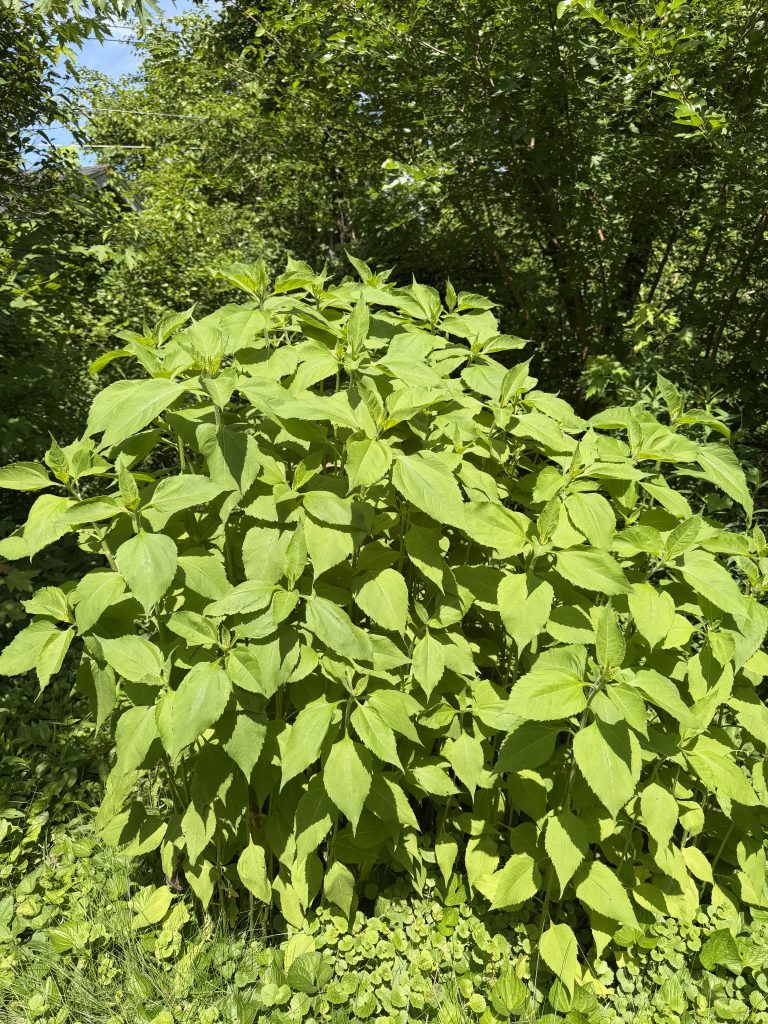
Sunchokes are native to North America and have been cultivated by Native Americans including the Cherokee, Cree, Huron, and Iroquois for thousands of years. Where I live in Indianapolis, Indiana, sunchokes easily spread and grow without any effort on my part other. I planted one tuber about 2 inches long and 1 inch thick six years ago and now have over 10,000 sunchokes growing on our property that all came from that one tuber.
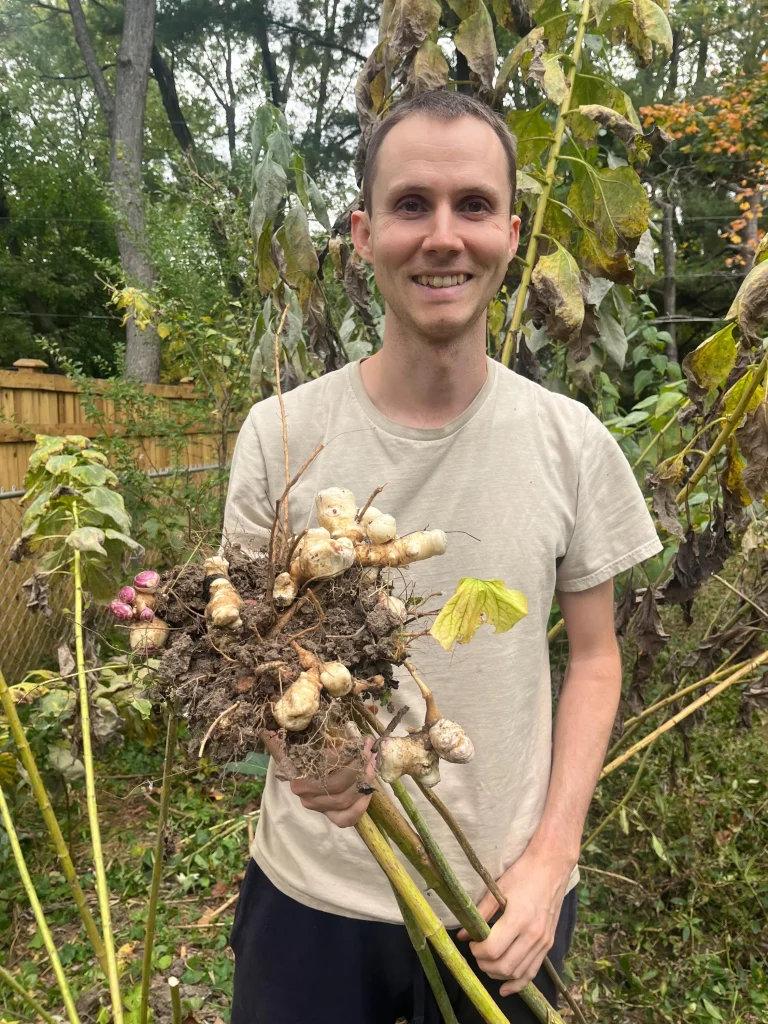
Sunchokes are a perennial plant grown from large tubers, and the plants grow and spread aggressively, meaning they will outcompete grasses and other plants with ease. You can simply put a tuber under an inch of soil inside dense grass or vegetation and they will thrive and spread without any weeding or tilling needed on your part.
Sunchokes form symbiotic relationships with beneficial microbes and fungi, such as arbuscular mycorrhizal fungi (AMF) and phosphate-solubilizing bacteria (PSB). These deeply connected organisms enhance sunchoke growth by improving nutrient and water uptake and making sunchokes incredibly resistant to drought (in other words, you don’t need to water them, but watering them when there has not been rain for a few weeks can increase your yields).
Because of the incredible relationships sunchokes form with these fungi and bacteria and other organisms in the soil in their native habitat, sunchokes can transform soils in a very short time. They grow great in heavy clay, heavy sand, and highly disturbed soils (and everything in between). This flexibility allows sunchokes to turn even the driest and most disturbed soils into thriving, rich topsoil within a few years.
The only soil sunchokes struggle to grow in would be soil that is regularly flooded for long periods of time. If the tubers are submerged in water for months, they may rot in the ground. Despite that, sunchokes can and often do thrive in floodplains here in the midwest.
How to Plant Sunchokes
Here’s how we recommend planting sunchokes:
Pick a sunny location. These plants are “native sunflowers,” meaning they love sun! The more sun they get, the happier they will be, and they can’t get too much of it. In low sun areas with two-to-four hours a day of sun, they will try to use their tall stalks to reach more sunlight and often still grow fine. With less than two hours of sun each day, sunchokes may still survive, but they will not thrive and be nearly as productive as they would be in an environment with more sunlight.
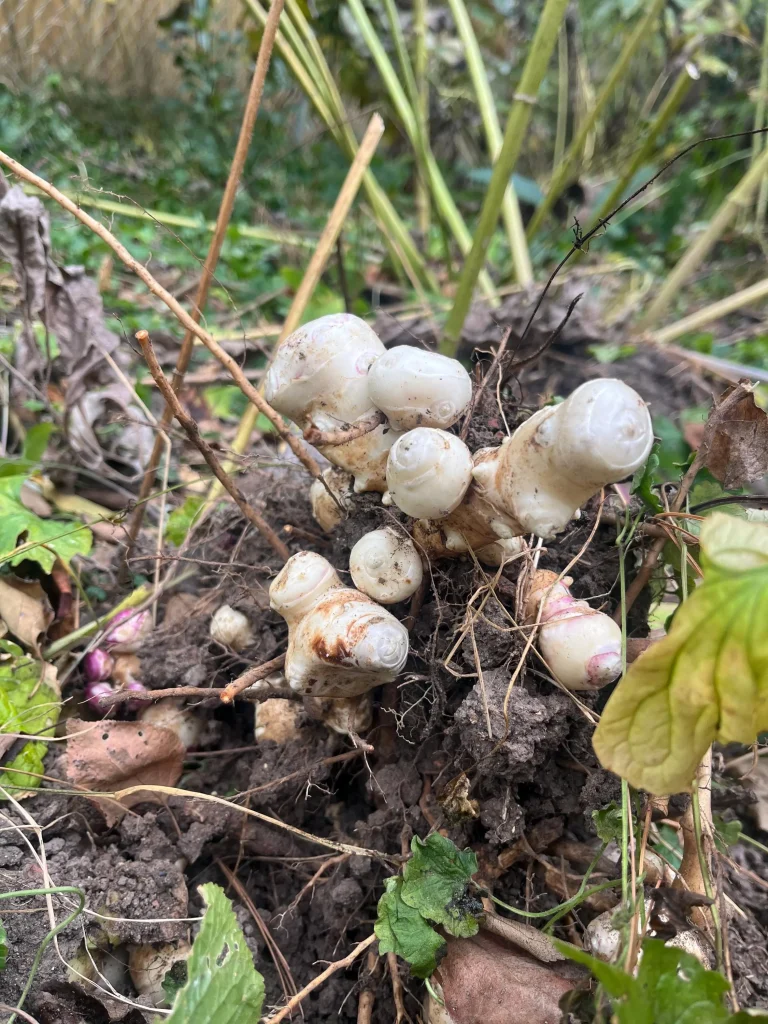
Ensure that your tubers are covered by soil. You do not need to plant them deeply, but ensure that enough soil covers the tubers to protect them from animals who want to eat them and to keep them from drying out (1/2 inch to 1 inch of soil is enough cover).
Don’t worry about the soil. Sunchokes thrive in very sandy and very clay-rich soil and everything in between. I have yet to find a soil that they have not thrived in. You can even put a tuber underneath a thick mat of grass lawn and they will grow just fine.
Weeding is not necessary. Sunchoke tubers have more than enough energy to compete with just about any other herbaceous plant in their native range. In fact, sunchokes seem to thrive best when they are surrounded by other living plants with which they can share nutrients, bacteria, mycorrhizal fungal connections, and more. The only time when you might need to weed for your sunchokes would be when there are trees or shrubs blocking the light (such as a thick mat of invasive Amur honeysuckle shrubs).
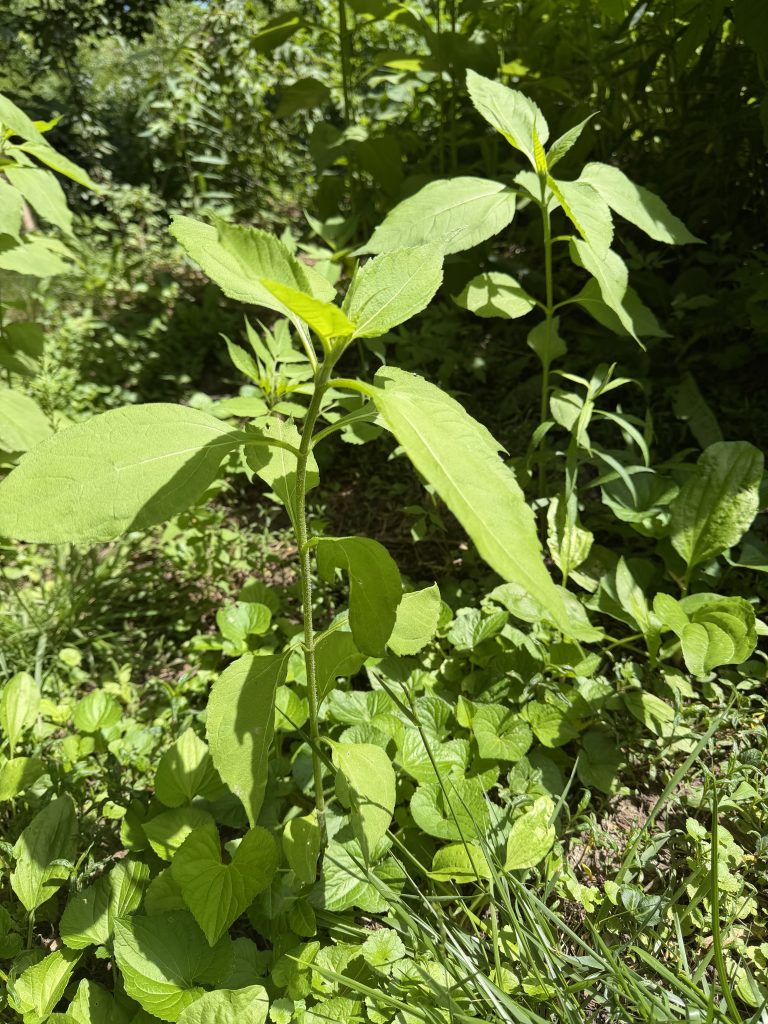
When to Plant Sunchokes
Anytime you have a tuber, you can plant sunchokes! Their hardiness is incredible.
The ideal time to plant sunchokes for a successful harvest at the end of the first growing season would be anytime between early winter and late spring, such as November to May here in Indiana. If you plant them later in the season, you may get less yield in the first year, and then your harvest in the second year should be quite large.
How to Keep Sunchokes from Spreading
Sunchokes spread aggressively and can often outcompete other plants and take over in garden beds.
Here are a few tips to keep your sunchokes from spreading in ways you might not want:
Harvest and Eat Them
As soon as the leaves die in the fall (usually in September or October in Indiana), you can begin harvesting sunchoke tubers and you can continue harvesting them until they begin sprouting in the spring (usually March to April in Indiana).
Because of how productive sunchokes are, it is almost impossible to overharvest sunchokes. A single tuber can sometimes produce as much as 10-20 pounds of tubers, and some of them can be quite deep. So unless you are meticulously digging up every inch of soil within 3-4ft of your sunchoke patch and removing every single tuber, you can still dig up and eat all the tubers you can find while still having enough left over to continue growing the next year.
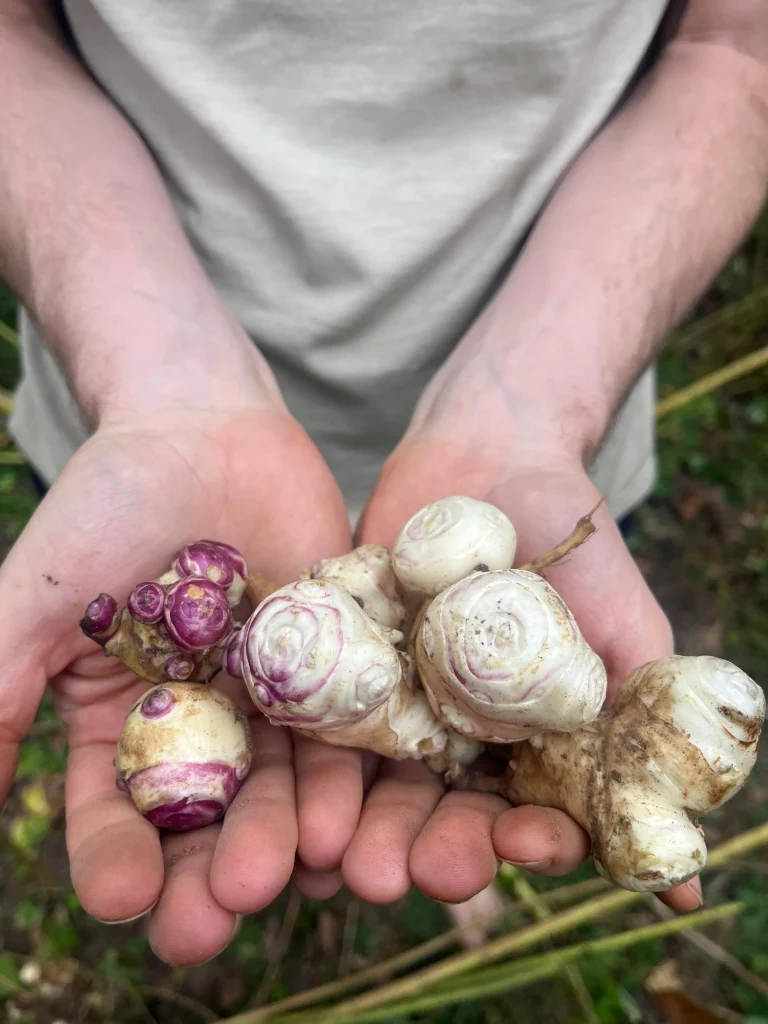
Eradicating sunchokes from your garden once they are well-established will often take either repeated mowing or a few years of digging and weeding to remove them completely. All this to say, don’t be shy when harvesting and eating your sunchokes! They have been bred to be a fantastic food crop for humans for thousands of years, and they perform magnificently in that role.
Mow Around the Garden Bed
If you have a garden bed with sunchokes and mow a circle around it, the sunchokes will not be able to thrive in the mowed area. The sunchokes will still spread into the mowed area, but they will not continue their spread because the mowing will stop them from being able to photosynthesize in that area.
This strategy is very effective with any aggressively spreading plants such as mints, goldenrod, native asters, and more.
If you already mow regularly, this is probably the easiest and most efficient system for keeping sunchokes from spreading to areas where you do not want them to grow.
Grow Sunchokes in Containers
If you have very limited space or just don’t want your sunchokes to spread, you can grow them in containers.
As long as they have sunlight, they will thrive and produce lots of beautiful flowers and tubers.
Don’t Use Weed Fabric or Garden Edging
Weed fabrics and garden edging will not stop sunchokes from spreading. Plastic weed fabrics will breakdown over time in the soil and are a very ineffective way to control sunchokes or weeds from growing. Furthermore, the microplastics these products release into the soil can damage your plants and reduce plants’ ability to photosynthesize by 7-12%.
Because weed fabric is ineffective and pollutes soil, water, and plants, I never recommend using it at all.
In addition, when you use weed fabrics, they will eventually get covered with a new layer of soil, while still creating a barrier between the upper and lower soil, making it even harder to weed or plant things in your garden beds. They end up wasting an enormous amount of your time and energy that could be better spent enjoying life instead of fighting the fabric.
Where to Buy Sunchokes
We sell and ship sunchoke tubers for planting and eating from September through March each year, and you can buy them at https://www.etsy.com/listing/4409720053/heirloom-jerusalem-artichoke-sunchoke?ref=shop_review
You can also check your local gardening and permaculture groups to see if anyone in your community can share some tubers with you.
Leave a Reply